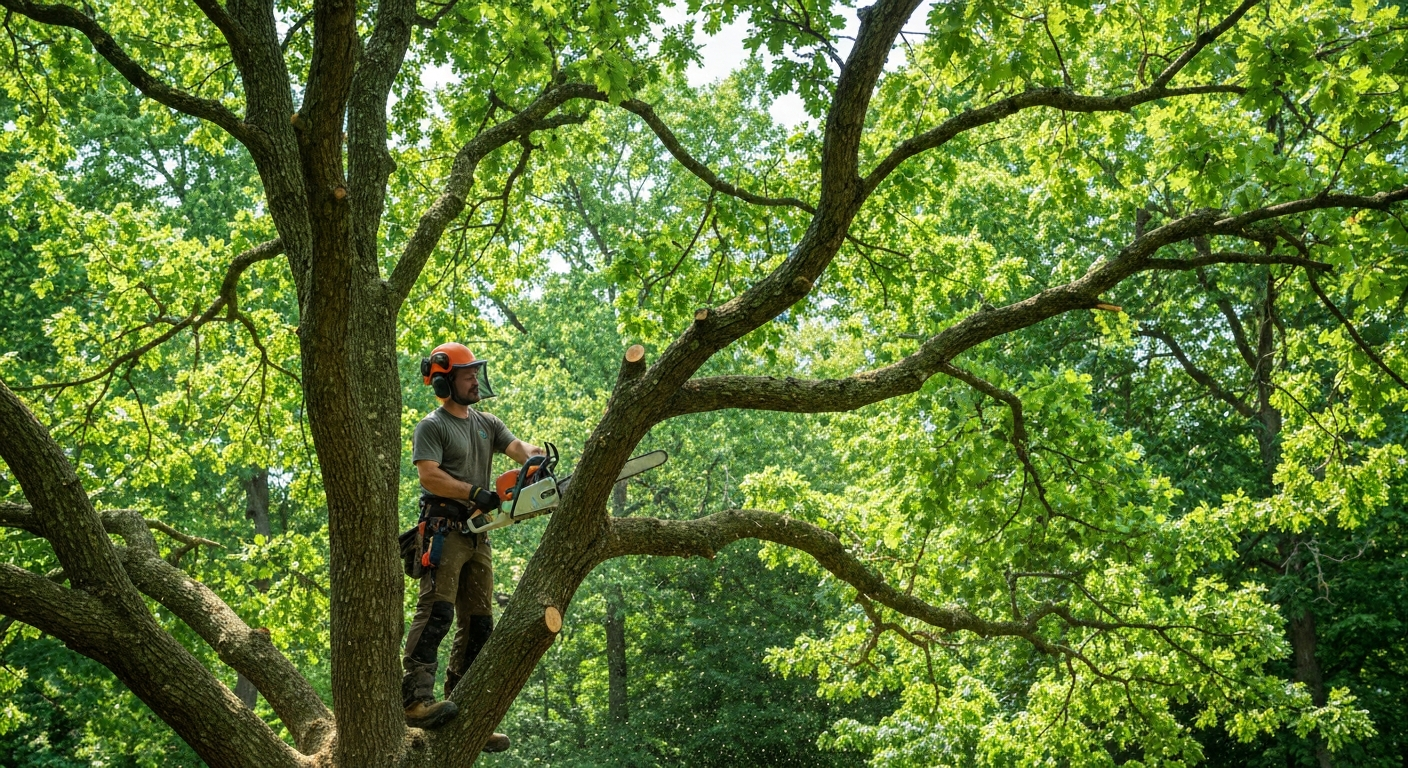
Crown Reduction, Thinning & Structural Pruning.
The most powerful investment you can make in a tree's long-term health. We follow ANSI A300 standards — no topping, no flush cuts, no guesswork.
- Crown reduction, thinning & raising
- Deadwooding & hazard reduction
- ANSI A300 standards
- No topping — ever
- All hardwood species
- Free written estimates
There is no single arboriculture practice more commonly done wrong than pruning. 'Topping' — cutting back the main leader and large limbs to stubs — is practiced widely in Iowa but causes long-term structural failure, rapid decay entry, and epicormic sprouting that weakens the very structure it was supposed to reduce. We don't top trees. We prune them correctly.
Crown Reduction
Crown reduction decreases the overall height or spread of the canopy by removing the outer branches back to a lateral that is at least one-third the diameter of the branch being removed. Done correctly, it reduces weight, wind resistance, and height risk while preserving the tree's natural form. Done incorrectly (topping), it accelerates decline. We do it correctly.
Crown Thinning
Thinning selectively removes branches throughout the crown to increase light penetration and air movement — reducing the risk of fungal disease, improving fruit or flower production, and reducing wind load without significantly changing the canopy's shape. It's the most commonly requested pruning type for mature hardwoods like oak, hickory, and walnut.
Crown Raising
Raising removes the lower branches of the crown to provide clearance for pedestrians, vehicles, structures, or sight lines. We remove only what's necessary to achieve the clearance goal — over-raising weakens the tree's ability to taper its trunk properly over time.
Deadwooding & Hazard Reduction Pruning
Deadwood in the canopy is the single most common source of falling-branch liability on residential properties. Deadwooding removes dead, dying, diseased, and structurally compromised branches systematically, reducing risk without removing healthy live tissue unnecessarily. We recommend annual inspections for mature oaks, elms, and cottonwoods over structures.
ANSI A300 Standards
Every cut our partners make follows ANSI A300 Part 1 (Pruning) standards — the industry benchmark established by the American National Standards Institute and maintained by TCIA. These standards define acceptable cut placement, maximum removal percentages, and timing guidelines by species. They exist because improper pruning shortens tree life and increases liability. We follow them because working with trees has taught us they're right.
Frequently Asked Questions
When is the best time to prune trees in Iowa?
For most hardwoods, late winter (February–March) before bud break is ideal — the tree is dormant, wounds heal quickly at bud break, and disease pressure is minimal. Oak trees should only be pruned in late fall or winter to avoid oak wilt infection, which spreads through fresh wounds during the spring sap-beetle season. We'll advise on timing specific to your tree species.
How much of the crown can be removed safely?
ANSI A300 guidelines recommend removing no more than 25% of the live crown in a single growing season for most species. Exceeding this threshold compromises the tree's energy reserves and structural response. If a situation requires more, we'll advise on a multi-year approach.
Do you prune evergreen trees?
Yes. Pine, spruce, and fir all benefit from selective pruning — dead branch removal, clearance pruning, and shaping for ornamental specimens. Timing differs from deciduous species; we'll advise based on what you have.